
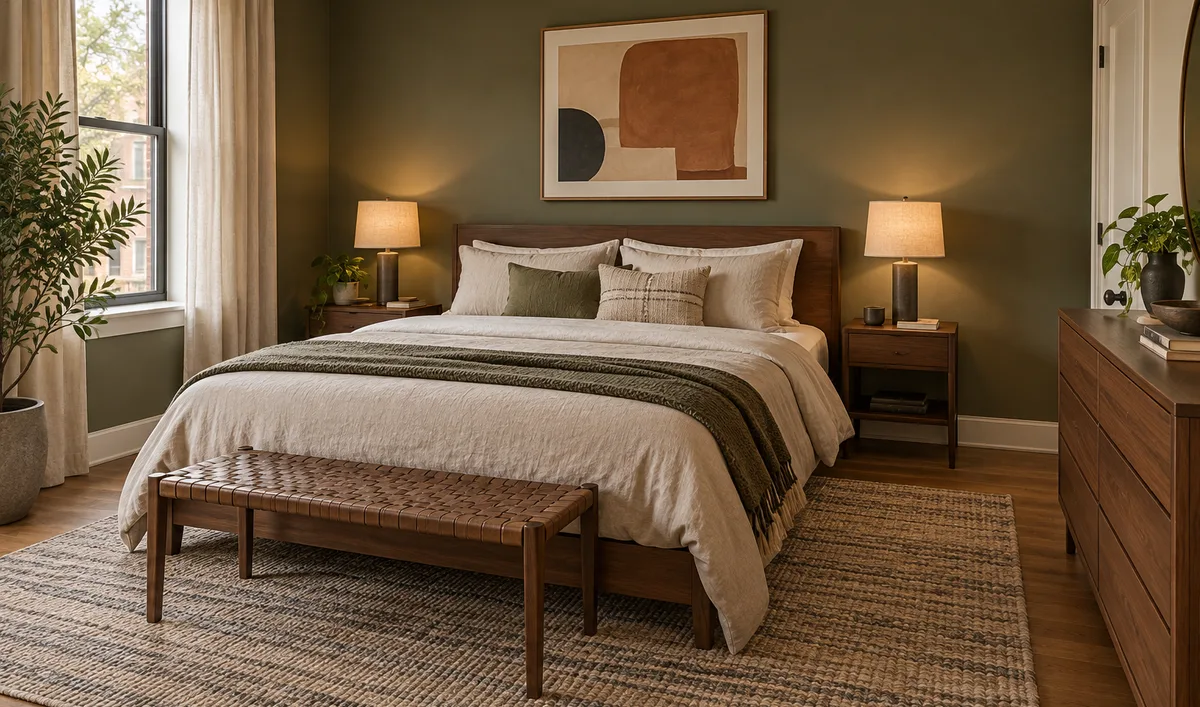
A bedroom says quite a lot before you do. A lamp within reach, fresh sheets, and a clear place to put a bag make a better welcome than a huge television facing a bare mattress. You can create that welcome without turning your home into a hotel suite.
My starting point for a bachelor bedroom is simple: make it a space you enjoy living in, then make it easy for someone else to relax there. The most useful men's bedroom ideas solve both problems. A good-looking room should still work on an ordinary Tuesday.
That is Bando's view of a trend heading into 2027. A bedroom cannot promise chemistry, but it can show care. Start with the details a guest will use, then give the space some character.
1. Build a neutral color palette with some warmth
For a masculine bedroom, I like warm wood, oatmeal bedding, and one deeper color. Olive, navy, or charcoal can give the room depth without making every surface dark. Neutral colors give you room to change the smaller pieces later.
Choose a color scheme from what you already own. A walnut dresser might lead to cream walls and an olive throw. A gray upholstered bed could suit warm white bedding and rust cushions. Repeat one accent in two places to tie the room together.
Black walls are a bigger commitment. Before you paint the whole bedroom, try a sample behind the headboard and look at it in daylight and lamplight. In a dim rental, rich fabrics can add depth while the walls stay light.
A fresh coat helps only if the color works in your space. Test samples beside the floor and furniture. The same gray that looks soft in a bright photo can look cold beside blue-toned carpet.
2. Make the bed your focal point
A bed with a clear outline gives bedroom design a center. That might mean a wood headboard, a padded one, or a simple platform bed. Choose a shape that suits the room rather than the largest frame you can afford.
Measure the full frame, including any shelf or wide ledge. A platform bed can extend well past the mattress. Tape its footprint on the floor, then open the bedroom door, closet, and dresser drawers. If the layout feels tight now, extra furniture will not help.
A tall headboard can bring character to a plain wall. If you already have a strong headboard, let it lead. You do not need a bold wall treatment, oversized art, and a dramatic light all fighting above it.
For a modern bedroom, clean lines are an easy starting point. Keep what feels sturdy and comfortable. There is no need to replace a sound bed frame just because it lacks this year's shape.
3. Choose bedding you can actually keep fresh
Start with sheets that fit, pillows that support you, and a duvet or quilt you can wash as directed. Then add texture: a woven throw, a cotton cover, or a subtle stripe. Two or three layers look cozy without burying the bed.
Use a small set of colors. Cream sheets, a charcoal duvet, and an olive throw work well together. If you prefer darker bedding, add a lighter pillowcase or blanket so the shapes remain clear.
Keep a spare set of sheets so laundry does not leave the mattress bare. Check care labels before buying rich fabrics that need more work than you want to give them. The best bedroom decor is easy to live with.
Sleeping pillows deserve more thought than accent cushions. Our guide to pillows for side sleepers explains how height and fill affect fit. Choose for the person using the pillow, then use the cover to suit the room.
4. Use warm lighting at more than one height
A single bright ceiling light can leave a bedroom feeling unfinished after dark. Add a shaded bedside lamp, then a second source across the room if needed. Keep the overhead light for getting dressed and finding what fell under the bed.
I would start with warm-white bulbs around 2700K to 3000K. The Department of Energy's lighting guide explains color temperature and the difference between brightness in lumens and power use in watts. A warmer bulb is not necessarily a dimmer bulb.
Check that bulbs suit the fixture, and use dimmable bulbs with a compatible dimmer. A shade should soften glare when you sit or lie down. Test that view before deciding a lamp belongs beside the bed.
Convenience matters too. Put switches within reach. A guest should not have to cross a dark room or learn a phone app to turn off a light. Warm lighting can create a relaxed mood while leaving enough light to see.
5. Give both sides of the bed a useful surface
Two bedside surfaces make a bachelor pad more welcoming. Each needs enough space for a phone, a glass of water, and perhaps a book. Matching nightstands look neat, but matching height and useful space matter more.
In a small bedroom, a narrow shelf may work better than a deep cabinet. Check wall fixings and rental rules before mounting it. Route charging cords behind furniture rather than across a walkway.
Leave part of each surface empty. A lamp, a coaster, and a small tray are plenty. If the second nightstand holds a printer and a tower of old mail, it is storage for you rather than usable space for a guest.
6. Choose clean lines and closed storage
Open shelves are useful for books and a few objects you like. Closed drawers are better for cables, spare sheets, and the small things that never look tidy in a pile. Good bedroom design gives each category a home.
A sleek dresser can serve as storage and a place for a mirror. A lidded hamper keeps laundry off the floor. Under-bed boxes suit items you use less often, provided they fit without blocking access or the frame's intended airflow.
Do not buy storage until you sort what you own. You may need fewer containers and a better routine. Keep the minimum on show that still lets the room feel like yours.
When designing masculine spaces, dark furniture is one choice, not a rule. A lighter wood cabinet with simple handles can look just as grown-up. Repeated finishes and clean lines do more for a calm bedroom than an all-black shopping list.
7. Soften the room with rugs and texture
Wood, metal, and plain walls give a modern bedroom structure. Soft materials add warmth. Combine a smooth bedside table with a woven rug and a quilted cover instead of making every surface glossy.
Choose rugs by the floor you want to feel underfoot. A large rug beneath the lower part of the bed can give both sides a soft landing. Two runners may fit a narrow bedroom better. Measure first so an edge does not catch a door.
Low-pile rugs are worth considering where you need doors and drawers to clear them. Check care instructions, use a suitable pad, and keep edges flat. A beautiful rug that trips you each morning is the wrong fit.
You do not need a perfect balance of every material. One woven piece and one soft layer may be enough. In masculine spaces with lots of dark wood, pale rugs and linen can brighten the whole view.
8. Add wall art that starts a real conversation
Choose art because you like it. A framed gig poster, a landscape, or your own travel photo can bring more personality than a set bought only to fill a wall. Your taste is part of the welcome.
Start with one piece at a useful scale. Lay paper templates against the wall before hanging a group. Leave breathing room around a headboard, and secure frames with fittings suited to their weight and the wall.
A small display can add flair without filling every shelf. Put a few records or books together and let the rest live elsewhere. You want character, not a bedroom that feels like a shop window.
9. Let daylight in, then add privacy
Window treatments need to work in two modes: open enough to brighten the bedroom by day, closed enough for privacy at night. Check the view from outside after dark. A thin curtain may reveal more than you expect.
For a renter, use the fittings allowed by your lease. Measure the full window and the space needed to draw curtains aside. Heavy fabric can make a cozy backdrop, but keep it clear of heaters and vents.
A mirror can help you get dressed and make a dim corner feel lighter. Place it where it reflects daylight or a calm part of the bedroom. Secure it properly, especially if it is tall. Avoid placing it where glare lands on the pillow.
10. Make the room smell clean by cleaning it
Fresh sheets, dry towels, an empty bin, and clean floors do more for a welcome than a strong fragrance. If the room smells stale, find the source before adding a candle or spray.
The EPA recommends controlling indoor pollution sources and improving ventilation. Open windows when outdoor air quality and weather allow. Address dampness rather than hiding it with scent.
If dust or pollen is a concern, our guide to air purifiers for allergies covers sizing and filter upkeep. A purifier supplements cleaning and ventilation; it does not replace either.
Keep fragrance light or skip it. A guest's preferences may differ from yours. Clean air and clean fabric leave room for both people to feel at ease.
11. Keep work and screens from taking over
A bedroom may also be your office. Give work a clear boundary: one desk, one place for papers, and cords kept together. Clear the chair when you finish work so it can be used.
If possible, position the desk outside the main view from the pillow. In a studio, a low shelf or a change in rug placement can mark the work area without closing off the space. Avoid adding a divider that blocks daylight or the path to the door.
A modern bedroom does not need a screen on every wall. If you want a television, make sure its size and location leave room for storage and art. Turn off distracting notifications when you have company.
12. Leave room for a guest
A clear chair, a hook, or a small bench gives someone a place to put a bag and clothes. Add one only if there is enough floor space. A bench at the foot of the bed is less useful if you must squeeze around it.
Keep a clean towel available and point out the bathroom. Make water easy to find. These small acts of hosting help someone settle in without needing to ask for every basic item.
Forget the idea that every guest wants the same mood. Ask whether the room is too warm or whether they prefer another light on. A thoughtful bedroom makes choices easy; it does not set expectations about what happens next.
Men's bedroom ideas for three different styles
Use a few reference images to create a small mood board before buying decor. Look for repeated colors and shapes you like. Then choose one direction you can carry through your own bedroom.
| Style | What to combine |
|---|---|
| Warm modern bedroom | Walnut furniture, cream bedding, olive accents, and shaded lamps. A useful starting point for a cozy space. |
| Quiet industrial | A slim metal frame, warm wood, gray textiles, and soft rugs. Keep bare bulbs and hard surfaces in check. |
| Light and relaxed | Pale wood, neutral colors, textured curtains, and a navy or rust accent. Suits a room where you want a brighter look. |
Take inspiration from interiors with a similar layout to yours. A huge loft photo offers limited help with a small rental bedroom. Scale down the furniture before trying to copy the style.
Which bedroom design changes should you make first?
Start with what interrupts daily life. If you cannot walk around the bed, fix the layout. If the bedding is worn out, replace it before buying art. If the room works well but feels stark, lighting and texture may be enough.
| Your situation | First changes |
|---|---|
| Little or no budget | Wash bedding, remove unused furniture, clear surfaces, and move a lamp from elsewhere in the house. |
| A modest refresh | Replace tired sheets, add a second light, and solve the worst storage problem. Buy art or a throw after the basics work. |
| A larger bedroom update | Choose the bed and layout first, then storage, window treatments, and rugs. Save finishing touches for last. |
For a small bachelor pad, I would skip a lounge chair before giving up a clear path. For a bright, spacious bedroom, larger rugs and a reading corner can help the furniture feel connected. Let the room set the limits.
Quick answers about masculine bedroom design
Does a masculine bedroom have to be dark?
No. Pale walls, wood furniture, simple shapes, and textured bedding can create the same grounded feel. Use charcoal or navy in small accents if you like them. Masculine style leaves plenty of room for light and color.
How do you update a rental bedroom?
Start with bedding, lamps, art, and furniture you can take with you. Check your lease before painting or attaching anything to the wall. A large headboard or curtain can add color when a painted feature wall is not an option.
What makes a bachelor bedroom feel welcoming?
Fresh bedding, gentle light, privacy, and usable space beside the bed are a strong start. Keep personal details, but leave room for another person. You are inviting someone into your life, not asking them to admire a showroom.
Can bedroom design improve your dating life?
A cared-for space can make a visit more comfortable. It cannot guarantee attraction or turn a match into a relationship. Build a bedroom you are happy to wake up in, with or without company.